

![[[pictureof]]](https://dist-tutor.info/user/pix.php/12919/f1.jpg)
Меня зовут Кириллова Екатерина Викторовна.
Вам нужны консультации по Английскому языку по Skype?
Если да, подайте заявку. Стоимость договорная.
Чтобы закрыть это окно, нажмите "Нет".
Укажите реальные данные, иначе мы не сможем с вами связаться!
Отправляя форму, Вы принимаете Условия использования и даёте Согласие на обработку персональных данных
Отправляя форму, Вы принимаете Условия использования и даёте Согласие на обработку персональных данных
The first school in Yakutsk was opened in 1735 on the initiative of Vitus Bering. It was called a garrison school because children whose parents were in the military attended the school. In the same year, a parish school was established at the Yakutsk Spassky Monastery. In 1739, the first technical school was opened in Yakutsk. Children were taught reading and writing, arithmetic, trigonometry and navigation skills for their possible future work in expeditions.Read more...
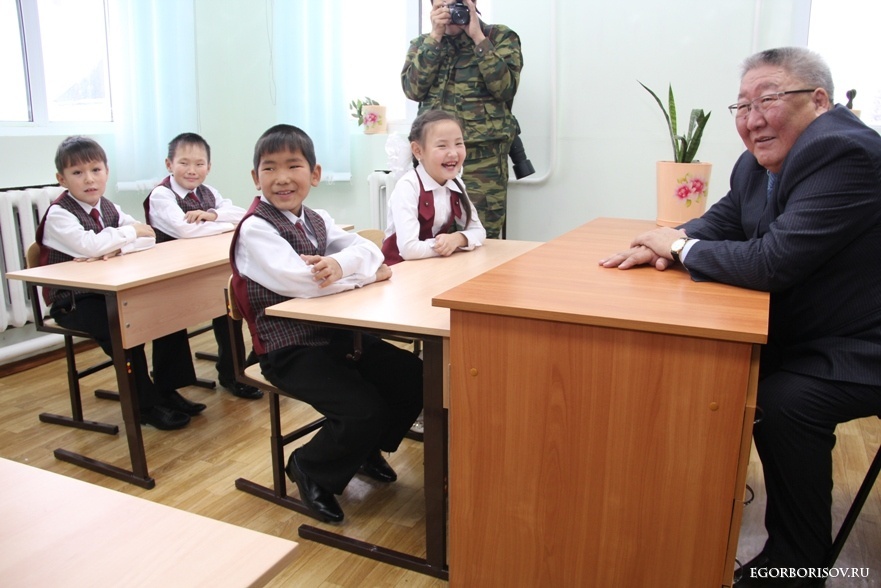
The first school in Yakutsk was opened in 1735 on the initiative of Vitus Bering. It was called a garrison school because children whose parents were in the military attended the school. In the same year, a parish school was established at the Yakutsk Spassky Monastery. In 1739, the first technical school was opened in Yakutsk. Children were taught reading and writing, arithmetic, trigonometry and navigation skills for their possible future work in expeditions.
At present, the secondary education system in the republic consists of about 700 schools of different types with a total of 200,000 students enrolled. Each school prbvides diversified education. Among the types of schools are high schools, lyceums and colleges, schools for children with special needs and boarding schools.
The three principles which guide state education policy are: access, quality and efficiency. These were defined by the Concept of Modernisation of Russian Education for the period up to 2010.
Schools are free to choose variations in their curricula so as to provide education according to the interests, capabilities and opportunities of the students. Thus, a network of multi-cultural schools ensures the implementation of the principle 'from the local community to the world, there are values common to all mankind'; their curricula can include courses in indigenous languages, ethnic psychology, ethnicity and culture.
In 1997, a network of presidential schools was established in order to encourage teaching initiatives. These are schools with an excellent teaching staff, and in which the curricula focus on by new content and advanced teaching technologies. They function as scientific, methodological and resource centres to spread advanced teaching methods to the various districts of the republic.
More than 70% of the comprehensive schools are located in rural areas. Due to the remoteness of schools, the use of new information technologies
in distance education are becoming increasingly attractive options. At present, all schools are well equipped with computers and software. There are also twenty-four schools that form a network of agrarian schools, which educate future farmers.
State education and training for children among the indigenous minority peoples of the north varies in organisation, material base and methodology. For example, nomadic schools copy traditional cultural practices, so education is placed in the context of life in the open air. The individual curricula take into account the unique aspects of the life patterns and traditional economies of the particular people. These schools provide a new model for schooling; one which matches the traditional nomadic way of life.
These new ways of providing education are contributing to the growth of different styles of high quality education. Thus, distance classes in Mathematics, Physics, Computer Science, Internet forums and on-line Olympiads ensure individual instruction in remote areas.
One of the most efficient forms of monitoring the quality of education is through the State Olympiads in different subjects. A number of schools can boast of the in-depth, specialised training of students who are local all-Russian and international Olympiad champions. One such is the Republican Physics and Mathematics Lyceum, which has excelled in the stimulation and training of its students. Its students are frequently members of the Russian national team in Mathematics, Physics and Information Science, and its graduates as a rule enter the best higher education establishments in Russia.
The Regional Coordination Centre of the Russian programme, 'Step to the Future', was formed in 1995 under the auspices of the Revival National Foundation 'Bargharyy'. The aim of the programme is to stimulate the interest of young people in science, to promote scientific and research activities among students and schoolchildren and to coordinate work with gifted children. Read more...

The Regional Coordination Centre of the Russian programme, 'Step to the Future', was formed in 1995 under the auspices of the Revival National Foundation 'Bargharyy'. The aim of the programme is to stimulate the interest of young people in science, to promote scientific and research activities among students and schoolchildren and to coordinate work with gifted children. The organising committee of the programme brought together the council of the Sakha Regional Coordination Centre of the Step to the Future programme, the M. K. Ammosov Sakha State University, the Yakutsk Science Centre of the Siberian branch of the Russian Academy of Sciences, the Academy of Sciences of the Sakha Republic and the Yakutsk Agricultural Research Institute.
The programme is divided into three different areas: the research work of young scientists, the research work of students in higher education institutions and colleges and the research work of pupils.
Traditionally, young researchers present their projects at regional and city conferences. The best projects are selected for the all-republic conference, which usually takes place every February in Yakutsk, with more than 500 participants. These are graduate and undergraduate university students, students from specialised secondary colleges and pupils of secondary schools who take part in various workshops - technology and engineering, environmental science, information technologies, the humanities, design, economics and others. At the same time, school teachers and university professors take part in what are known as the Alexeevsky Readings, where they share advanced teaching technologies and achievements.
The subjects of the presentation projects are diverse. Most of them have regional aspects and are aimed at solving local problems. Here, for example are the titles of some of the projects: Ways of reducing unemployment in the village; A new design for diamond cutting; Family economics in rural areas; The development of private business in Yakutia; Pension reform in Yakutia; The role of non-governmental organisations in improving children's health.
The winners of the all-republic conference take part in the all-Russian conference in Moscow and the outstanding ones go on to represent the Russian Federation and compete at European Union level.
The contemporary social and economic policy of the Sakha Republic is aimed at the inclusion of the republic in world economic processes in the near future, and at turning it into one of the best-developed territories of of the Russian Federation. The rapid development of
all-round high quality education is the only way to achieve this aim. The scientific and research work done by children and students shows their potential for future occupations at an early stage and provides career guidance. That is why education and research is of great significance.
Research in Yakutia began more than 300 years ago. Between the 18th and the 20th centuries, discoveries were made in Yakutia in the areas of geography, meteorology, geology and archeology. Contemporary research and science is represented by various establishments including academic science centres, universities and research centres.Read more...

Research in Yakutia began more than 300 years ago. Between the 18th and the 20th centuries, discoveries were made in Yakutia in the areas of geography, meteorology, geology and archeology. Contemporary research and science is represented by various establishments including academic science centres, universities and research centres. The scientists and researchers of the Sakha Republic carry out research in areas such as geology, biology, permafrost studies, physics, economics, mining, aeronomics, environmental studies, medicine, archeology, chemistry, history, ethnography, sociology, linguistics, folklore, literature and the arts.
The formation of scientific research institutes in Yakutia began with research between 1925 and 1930, by the Commission on the Study of the Production Forces of the Yakutsk Autonomous Soviet Socialist Republic. The aim of the research was to collect the information necessary for the development of the economy and culture of the republic, the establishment of research institutes and the training of local scientists. The Commission opened thirty research institutions, a scientific library, a geophysical observatory, a geochemical laboratory, a polar radio station, meteorological, aeronomic and hydro-meteorological stations, as well as other institutions.
The first research institute was founded in Yakutia in 1935. It was the Institute of Sakha Language and Literature, aimed at the study of the humanities in the north-eastern part of Russia. At present, scientific research is carried out at nine institutes of the Siberian branch of the Russian Academy of Sciences, at six institutes under the Academy of Sciences of the Sakha Republic, at the Sakha State University, the Sakha Agricultural Academy and the Sakha Scientific Agricultural Research Institute, as well as at branches of research institutes.
Scientists and researchers are involved in programmes and projects which are concerned with northern issues. One of the research institutes - the Institute of Permafrost - deals with the complex study of the permafrost areas, including the study of underground water, resource capacity and the environmental aspects of permafrost areas. The Institute of Space Physics and Aeronomics was founded in 1962. The main scientific areas of interest for the institute are the physics and astrophysics of cosmic rays, the physics of solar-terrestrial interactions, investigations of inter-planetary and near-Earth space and the physical processes in the magnetosphere and ionosphere of the Earth.

Клиентам
Репетиторам
Партнеры